Sometimes I have trouble remembering what I had for breakfast yesterday.
And before you start laughing, let me ask you something.
Do you remember what you were doing a year ago today? How about five years ago? Can you remember what was worrying you ten years ago on this very date?
Probably not.
But what about November 19, 1863?
I recently read an article by historian Heather Cox Richardson that reminded me of something worth remembering.
On this date, 163 years ago, something happened in a little Pennsylvania town that changed the way we understand America.
Four months earlier, from July 1–3, more than 150,000 Union and Confederate soldiers had fought one of the bloodiest battles of the Civil War in and around Gettysburg.
More than 7,000 men had been killed. The little town, with fewer than 2,500 residents, was left to deal with thousands of bodies, hurriedly buried in makeshift graves.
The community eventually established a national cemetery to give the fallen Union soldiers a proper resting place.
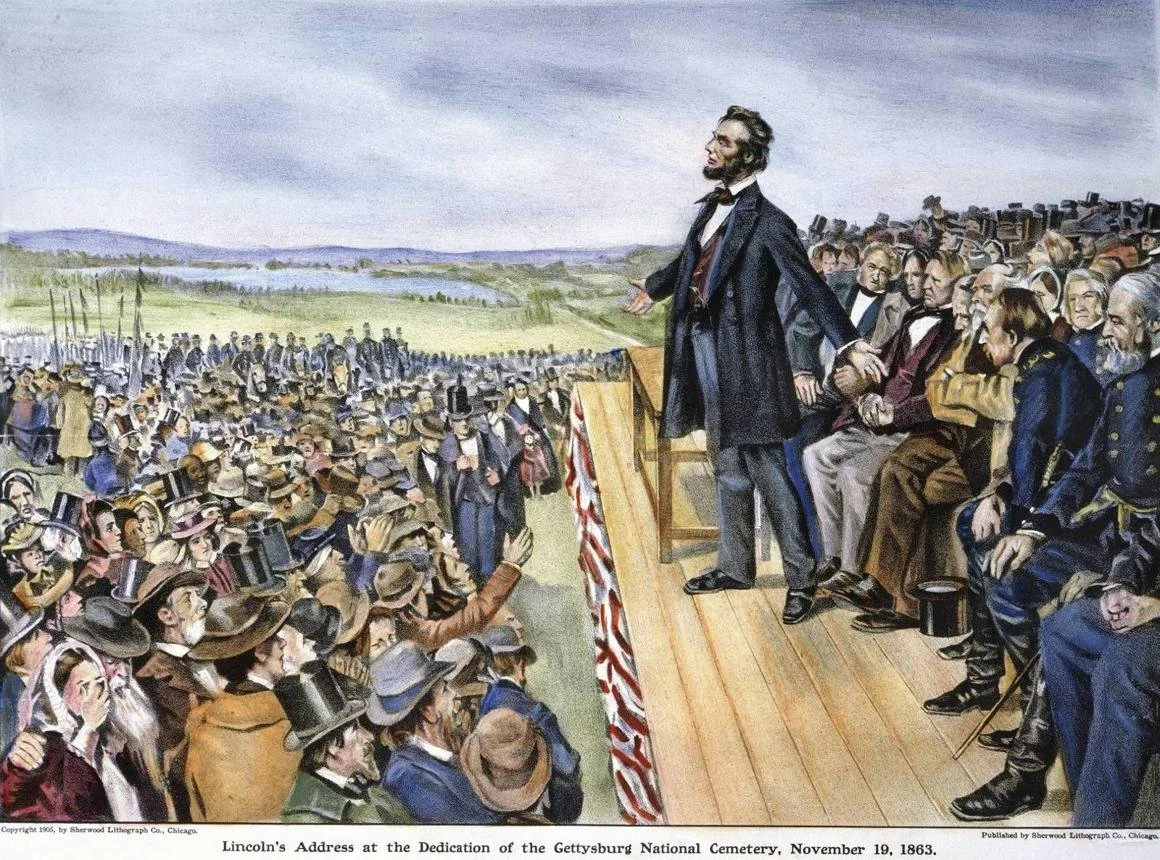
On November 19, 1863, approximately 15,000 people gathered for its dedication.
The featured speaker was Edward Everett, one of the country’s most celebrated orators. He spoke for two hours.
President Abraham Lincoln had been invited almost as an afterthought to offer a few appropriate remarks.
He stood up and spoke for about two minutes.
Two minutes.
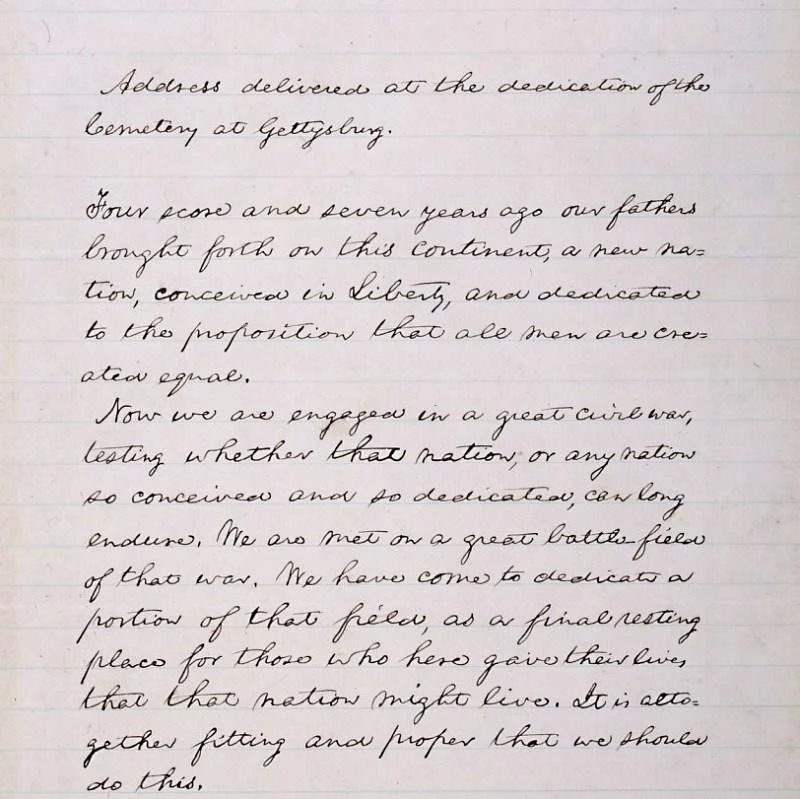
Beginning with those now-familiar words, “Four score and seven years ago,” Lincoln did something extraordinary.
He reminded a divided nation that America was founded on an idea: that all people are created equal.
He acknowledged that the country was engaged in a terrible struggle to determine whether a nation built on that principle could survive.
And then he shifted the focus.
The people who had died at Gettysburg had already given everything they could give. The responsibility now belonged to those of us who remained.
“It is for us the living,” he said, “to be dedicated here to the unfinished work.”
Unfinished work.
That’s the part I keep coming back to.
Lincoln wasn’t suggesting that the battle had settled everything. He wasn’t pretending the country had figured it all out. He was reminding people that the work of creating a more perfect nation wasn’t finished.
And it still isn’t.
Perhaps that’s why those two minutes have lasted longer in our memories than the two-hour speech that preceded them.
Because some words don’t simply describe history. They challenge us to make history.
I wonder what Lincoln would say if he could see us today.
Would he remind us that our differences don’t have to destroy us? That the principles we claim to believe in must be reflected in how we treat one another? That democracy, freedom, equality, and community aren’t things we inherit once and then take for granted?
They are things we have to keep working at.
And maybe that’s the Caring Catalyst message in all of this.
We spend a lot of time remembering what happened yesterday, worrying about tomorrow, and sometimes forgetting what matters today.
But there is unfinished work all around us.
A neighbor who needs a little kindness. Someone whose opinion differs from ours but deserves our respect. A relationship that needs mending. A community that needs our participation. A person who simply needs to know they matter.
We may not have two minutes to change the course of a nation. But we have countless opportunities to change the course of someone’s day.
So, on this November 19th, let’s remember Gettysburg.
Let’s remember those who gave their lives.
And let’s remember that the work of making this a kinder, more compassionate, more inclusive world belongs to us.
After all, the work isn’t finished.
And it never will be.
What’s one small piece of that unfinished work you can take on today?